 Local · LA Today Wire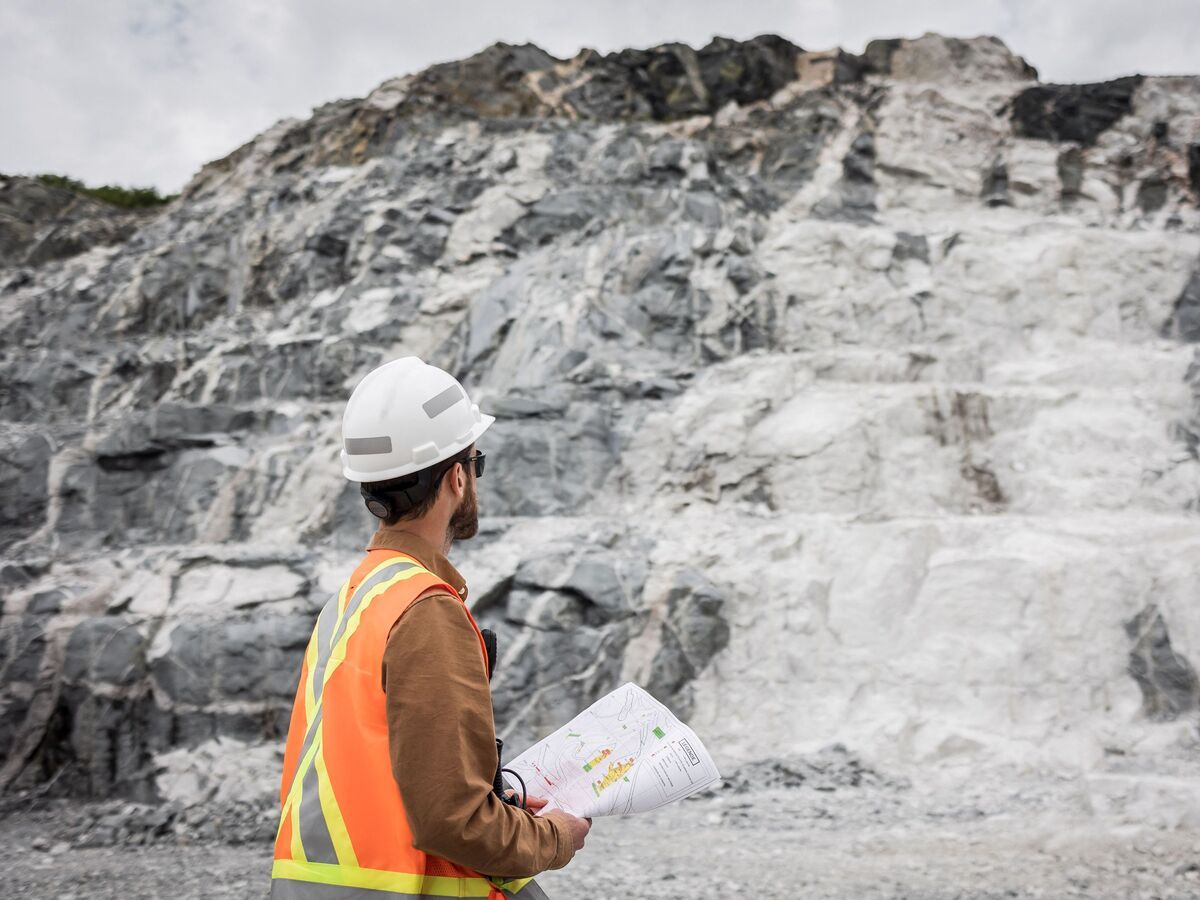
Skip to Content News Archives Economy Defence Energy Oil & Gas Renewables Electric Vehicles Mining Commodities Agriculture Real Estate Mortgages Mortgage Rates Finance Banking Insurance Fintech Cryptocurrency Defence Work Wealth Smart Money Wealth Management Investor Personal Finance Family Finance Retirement Taxes High Net Worth FP Comment Executive Women Puzzmo Newsletters Financial Times Business Essentials More Innovation Information Technology FP500 Podcasts Small Business Lives Told Tails Told Shopping Financial Post Store Obituaries Place a Notice Advertising Advertising With Us Advertising Solutions Postmedia Ad Manager Sponsorship Requests Classifieds Place a Classifieds ad Working Profile Settings My Subscriptions My Offers Newsletters Customer Service FAQ News Economy Energy Mining Real Estate Finance Defence Work Wealth Investor FP Comment Executive Women Puzzmo Newsletters Financial Times Business Essentials Home Commodities Mining Canada's 'excessive' tax breaks for mining sector risk distorting the economy, warn economists New research paper says the incentives can steer investment towards marginal projects and away from more deserving endeavours Last updated 3 hours ago Mineral exploration and development expenditures in Canada have both increased in recent years. Photo by MATHIEU DUPUIS/SAYONA/AFP via Getty Images files Canada’s zeal to grow its critical mineral and mining sector has led to an “excessive” number of tax incentives, which risks distorting the economy by funnelling investment into marginal projects, says a new research paper . Subscribe now to read the latest news in your city and across Canada.
Exclusive articles from Barbara Shecter, Joe O'Connor, Gabriel Friedman, and others. Daily content from Financial Times, the world's leading global business publication. Unlimited online access to read articles from Financial Post, National Post and 15 news sites across Canada with one account.
National Post ePaper, an electronic replica of the print edition to view on any device, share and comment on. Daily puzzles, including the New York Times Crossword. Subscribe now to read the latest news in your city and across Canada.
Exclusive articles from Barbara Shecter, Joe O'Connor, Gabriel Friedman and others. Daily content from Financial Times, the world's leading global business publication. Unlimited online access to read articles from Financial Post, National Post and 15 news sites across Canada with one account.
National Post ePaper, an electronic replica of the print edition to view on any device, share and comment on. Daily puzzles, including the New York Times Crossword. Create an account or sign in to continue with your reading experience.
Access articles from across Canada with one account. Share your thoughts and join the conversation in the comments. Enjoy additional articles per month.
Get email updates from your favourite authors. Create an account or sign in to continue with your reading experience. Access articles from across Canada with one account Share your thoughts and join the conversation in the comments Enjoy additional articles per month Get email updates from your favourite authors Sign In or Create an Account or Economists Philip Bazel and Jack Mintz of the University of Calgary’s School of Public Policy recommend eliminating or scaling back exploration tax credits , reducing corporate income tax deductions and other reforms to simplify the tax system for the mining sector.
Mineral exploration and development expenditures in Canada have both increased in recent years, which they say shows that investors are already interested in the sector. Bazel and Mintz say there are so many tax incentives for mineral exploration now that it risks reducing the long-term value of the country’s resource wealth by bringing poor projects into production today rather than in the future when their value would be greater. “Canada has one of the most competitive mining tax systems in the world,” the authors said.
“For most mining products, the overall tax burden in Canada is lower than in competing jurisdictions, which means that more targeted tax incentives aren’t needed to attract investment.” The paper was written before Prime Minister Mark Carney introduced his proposed productivity mega deduction on Sept. 15 at the Canada Investment Summit . It would allow businesses to immediately write off 100 per cent of the cost of a new and expanded group of eligible capital assets. Mintz said he has not yet modelled the impacts of the mega deduction, but it is likely to exacerbate the problem he sees of encouraging investment in undeserving mining projects.
“What people forget is that productivity does not just depend on investment,” he said. “It depends on allocating capital to the best use.” He said tax incentives that subsidize marginal projects that would not otherwise draw market investment hurt productivity by drawing investment away from more deserving opportunities. In highlighting the cons of tax incentives, the paper clashes with decades of policy.
For example, a unique feature of Canada’s mining tax system is flow-through shares, which allow investors who purchase them to deduct 100 per cent of the investment amount directly from their taxable income. This allows early stage mining companies, which often lack revenue, to transfer tax deductions and credits to investors and thereby raise money for projects. But Mintz said flow-through shares allow investors to ignore whether the company issuing the shares has a viable project.
“I’ve heard from many investors who say we really don’t care that much about how well the project does because we get all these tax benefits,” he said. “They’re hardly putting in any risk capital.” Nonetheless, both former prime minister Justin Trudeau and Carney have prioritized tax incentives. Trudeau in 2022 introduced the critical mineral exploration tax credit (CMETC), which effectively doubled the standard tax incentive for a list of eligible minerals to 30 per cent from 15 per cent.
Carney then expanded the list of eligible minerals in 2025. That credit is scheduled to expire in March 2027, so industry groups, such as the Prospectors & Developers Association of Canada (PDAC), are actively lobbying for an extension. “They work and they’re effective,” Jeff Killeen, senior director of policy at PDAC, said.
Based on PDAC’s analysis of public and private data, mineral reserves in Canada have been declining in recent years. Killeen credited the CMETC and other tax incentives with helping companies significantly increase investment so that mineral reserves can grow again. Citing federal data, he said mining sector companies in 2025 raised approximately $4.6 billion for domestic mineral exploration, and his organization estimates about $1.6 billion was raised through flow-through shares.
Most of the roughly 900 mining sector companies on the TSX Venture Exchange — representing 59 per cent of the entire exchange — lack revenue and struggle to raise capital, Killeen said. “Without those types of (tax) credits, that capital will go elsewhere,” he said. Some of the increased investment in recent years is attributable to other factors, such as the rise in commodity prices and the geostrategic shift coming out of COVID-19, when Canada and other countries applied new focus to their supply chain vulnerabilities.
Mintz and Bazel said Canada’s mining sector already enjoys a favourable tax system, among the lowest in an analysis of 27 major mining jurisdictions around the world, including Australia, China, the United States. On a provincial basis, they recommend British Columbia’s model of “cash-flow taxes that fully expense capital investment and allow unused deductions to earn interest.” Overall, they project their recommendations would lead to a reduction in the effective tax rates on new investment in non-critical mining to 12.5 per cent from 13.2 per cent, averaged across provinces, but an increase on critical mining to 12.5 per cent from 10.2 per cent. “Taxation is not the main barrier,” the authors said.
“Instead, the barriers to mining investment are regulatory delays, permitting uncertainty and project approval.” Join the Conversation This website uses cookies to personalize your content (including ads), and allows us to analyze our traffic. Read more about cookies here . By continuing to use our site, you agree to our Terms of Use and Privacy Policy .
Source: Financial Post